|
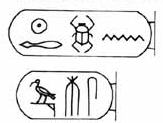
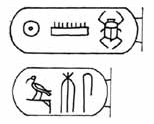
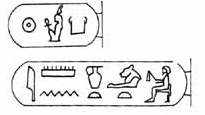
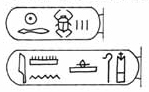
EARLY DYNASTIC
PERIOD
|
1st Dynasty c.3000-2890 |
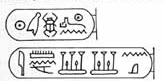
Aha |
 |
|
c.3000-2686 |
|
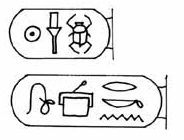
Djer |
 |
|
|
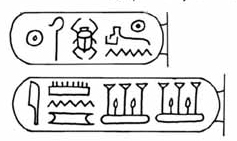
Djet |
 |
|
|
Den |
 |
|
|
Queen Merneith |
 |
|
|
Anedjib |
 |
|
|
Semerkhet |
 |
|
|
Qa'a |
 |
|
2nd Dynasty
2890-2686
|
Hetepsekhemwy |
 |
|
|
Raneb |
 |
|
|
Nynetjer |
 |
|
|
Weneg |
|
|
|
Sened |
|
|
|
Peribsen |
 |
|
|
Khasekhemwy |
.jpg) |
|
OLD KINGDOM
|
3rd Dynasty
2686-2613 |
Nebka |
|
|
2686-2160 |
|
Djoser (Netjerikhet) |
 |
|
|
Sekhemkhet |
 |
|
|
Khaba |
|
|
|
Huni |
|
|
4th Dynasty
2613-2494 |
Sneferu |
 |
|
|
Khufu (Cheops) |
 |
|
|
Djedefra (Radjedef) |
 |
|
|
Khafra (Chephren) |
 |
|
|
Menkaura (Mycerinus) |
 |
|
|
Shepseskaf |
 |
|
5th Dynasty
2494-2345 |
Userkaf |
 |
|
|
Sahura |
 |
|
|
Neferirkara |
 |
|
|
Shepseskara |
 |
|
|
Raneferef or Nefer-ef-Ra |
 |
|
|
Nyuserra |
 |
|
|
Menkauhor |
 |
|
|
Djedkara |
 |
|
|
Unas |
 |
|
6th Dynasty
2345-2181 |
Teti |
 |
|
|
Userkara [a
usurper] |
|
|
|
Pepy I (Meryra) |
 |
|
|
Merenra |
|
|
|
Pepy II (Neferkara) |
 |
|
|
Nitiqret |
|
|
7th and 8th
Dynasties 2181-2160 |
Numerous kings, called Neferkara, presumably imitating Pepy II. |
|
| FIRST INTERMEDIATE PERIOD |
9th and 10th Dynasties (Herakleopolitan)
2160-2025 |
Khety (Meryibra) |
 |
|
2160-2055 |
|
Khety (Nebkaura) |
|
|
|
Khety (Wahkara) |
 |
|
|
Merykara |
 |
|
-
11th Dynasty 2125-2055
- Thebes only, before unification
|
Intef I (Sehertawy) |
 |
|
|
Intef II (Wahankh) |
 |
|
|
Intef III (Nakhtnebtepnefer) |
 |
|
MIDDLE KINGDOM
|
11th Dynasty 2055-1985
|
Mentuhotep II (Nebhepetra) |
.jpg) |
|
2055-1650 |
(all Egypt) |
Mentuhotep III
(Sankhkara) |
.jpg) |
|
|
Mentuhotep IV (Nebtawyra) |
 |
|
12th Dynasty
1985-1773 |
Amenemhat I (Sehetepibra) |
 |
|
|
Senusret I (Kheperkara) |
 |
|
|
Amenemhat II (Nubkaura) |
 |
|
|
Senusret II (Khakheperra) |
 |
|
|
Senusret III (Khakaura) |
 |
|
|
Amenemhat III
(Nimaatra) |
 |
|
|
Amenemhat IV
(Maakherura) |
 |
|
|
Queen
Sobekneferu (Sobekkara) |
|
|
13th Dynasty
1773-after 1650 |
Wegaf (Khutawyra) |
 |
|
|
Sobekhotep II (Sekhemra-khutawy) |
|
|
|
Iykhernefert
Neferhotep (Sankhta sekhemra) |
|
|
|
Ameny-intef-amenemhat (Sankhibra) |
|
|
|
Hor (Awibra) |
 |
|
|
Khendjer (Userkara) |
 |
|
|
Sobekhotep III
(Sekhemra-sewadjtawy) |
|
|
|
Neferhotep I (Khasekhemra) |
 |
|
|
Sahathor |
|
|
|
Sobekhotep IV (Khaneferra) |
.jpg) |
|
|
Sobekhotep V |
 |
|
|
Ay (Merneferra) |
.jpg) |
|
14th Dynasty
c.1773-1650 |
Minor rulers probably
contemporary with the 13th or 15th Dynasty |
|
|
SECOND
INTERMEDIATE PERIOD |
15th Dynasty
(Hyksos) 1650-1550 |
Salitis/Sekerher |
|
|
1650-1550 |
|
Khyan (Seuserenra) |
 |
|
|
Apepi (Aauserra) |
|
|
|
Khamudi |
|
|
16th Dynasty
c.1650-1580 |
Theban early rulers contemporary with the 15th Dynasty | |
|
17th Dynasty c.1580-1550 |
Rahotep |
|
|
|
Sobekemsaf I |
|
|
|
Intef VI (Sekhemra) |
|
|
|
Intef VII (Nubkheperra) |
 |
|
|
Intef VIII (Sekhemraherhermaat) |
|
|
|
Sobekemsaf II |
|
|
|
Siamun |
 |
|
|
Taa (Senakhtenra/Seqenenra) |
 |
|
|
Kamose (Wadjkheperra) |
 |
|
NEW KINGDOM |
18th Dynasty
1550-1295 |
Ahmose (Nebpehtyra) |
 |
|
1550-1069 |
|
Amenhotep I (Djeserkara) |
 |
|
|
Thutmose I (Aakheperkara) |
 |
|
|
Thutmose II (Aakheperenra) |
 |
|
|
Thutmose III (Menkheperra) |
 |
|
|
Queen
Hatshepsut (Maatkara) |
 |
|
|
Amenhotep II (Aakheperura) |
 |
|
|
Thutmose IV (Menkheperura) |
 |
|
|
Amenhotep III (Nebmaatra) |
 |
|
|
Amenhotep
IV/Akhenaten (Neferkheperurawaenra) |
 |
|
|
Neferneferuaten
(Smenkhkara) |
 |
|
|
Tutankhamun (Nebkheperura) |
 |
|
|
Ay (Kheperkheperura) |
 |
|
|
Horemheb (Djeserkheperura) |
 |
|
RAMESSIDE PERIOD |
19th Dynasty
1295-1186 |
Ramesses I (Menpehtyra)
|
 |
|
1295-1069 |
|
Sety I (Menmaatra) |
 |
|
|
Ramesses II (Usermaatra
Setepenra) |
 |
|
|
Merenptah (Baenra) |
 |
|
|
Amenmessu (Menmira) |
 |
|
|
Sety II (Userkheperura
Setepenra) |
 |
|
|
Siptah (Akehnrasetepenra) |
 |
|
|
Queen Tausret (Sitrameritamun) |
 |
|
20th Dynasty
1186-1069 |
Sethnakht (Userkhaura
Meryamun) |
 |
|
|
Ramesses III (Usermaatra
Meryamun) |
 |
|
|
Ramesses IV (Heqamaatra
Setepenamun) |
 |
|
|
Ramesses V (Usermaatra
Sekheperenra) |
|
|
|
Ramesses VI (Nebmaatra
Meryamun) |
 |
|
|
Ramesses VII (Usermaatra
Setepenra Meryarnun) |
|
|
|
Ramesses VIII (UsermaatraAkhenamun) |
|
|
|
Ramesses IX (Neferkara
Setepenra) |
 |
|
|
Ramesses X (Khepermaatra
Setepenra) |
|
|
|
Ramesses XI (Menmaatra
Setepenptah) |
 |
|
THIRD
INTERMEDIATE PERIOD |
21st Dynasty
1069-945 (in Tanis) |
Smendes (Hedjkheperra
Setepenra) |
|
|
1069-664 |
|
Amenemnisu (Neferkara) |
|
|
|
Psusennes I [Pasebakhaenniut]
(Akheperra Setepenamun) |
 |
|
|
Amenemope (Usermaatra
Setepenamun) |
 |
|
|
Osorkon the
Elder (Akheperra setepenra) |
|
|
|
Siamun (Netjerkheperra
Setepenamun) |
 |
|
|
Psusennes II [Pasebakhaenniut]
(Titkheperura Setepenra) |
 |
|
22nd Dynasty
945-715 (in Bubastis) |
Sheshonq I (Hedjkheperra) |
 |
|
(Rulers at
Tanis) |
Osorkon I (Sekhemkheperra) |
 |
|
|
Sheshonq II (Heqakheperra) |
 |
|
|
Takelot I |
|
|
|
Osorkon II (Usermaatra) |
 |
|
|
Takelot II (Hedjkheperra) |
 |
|
|
Sheshonq III (Usermaatra) |
 |
|
|
Pimay (Usermaatra) |
|
|
|
Sheshonq V (Aakheperra) |
|
|
|
Osorkon IV (Aakheperra) |
|
|
23rd Dynasty
818-715 (in Leontopolis) |
Kings in
various centres, contemporary with the later 22nd, 24th, and early 25th
dynasties, including: |
|
|
|
Pedubastis I (Usermaatra) |
|
|
|
Iuput I |
 |
|
|
Sheshonq IV |
|
|
|
Osorkon III (Usermaatra) |
|
|
|
Takelot III (Usermaatra) |
|
|
|
Rudamon (Usermaatra) |
|
|
|
Peftjauawybast |
|
|
|
Iuput II (Usermaatra) |
|
|
|
|
|
|
24th Dynasty
727-715
(in Sais) |
Bakenrenef
(Bocchoris) |
|
|
25th Dynasty
747-656 (in Napata) |
Piy
(Menkheperra) |
|
|
|
Shabago
(Neferkara) |
 |
|
|
Shabitgo(Djedkaura) |
 |
|
|
Taharqo
(Khunefertemra) |
 |
|
|
Tanutamani (Bakara) |
 |
-
LATE PERIOD
- 664-332
|
26th Dynasty
664-525 |
Nekau I |
 |
|
(The Saites) |
Psamtek I (Wahibra) |
 |
|
|
Nekau II (Wehemibra) |
|
|
|
Psamtek II (Neferibra) |
 |
|
|
Apries (Haaibra)
|
 |
|
|
|
Ahmose II [Amasis]
(Khnemibra) |
 |
|
|
Psamtek III (Ankhkaenra) |
 |
|
27th Dynasty 525-404
|
Cambyses |
 |
|
(1st Persian Period) |
Darius I |
 |
|
|
Xerxes I |
 |
|
|
Artaxerxes I |
 |
|
|
Darius II |
|
|
|
Artaxerxes II |
|
|
28th Dynasty
404-399 |
Amyrtaios |
|
|
29th Dynasty
399-380 |
Nepherites I [Nefaarud] |
 |
|
|
Hakor [Achoris]
(Khnemmaatra) |
 |
|
|
Nepherites II |
|
|
30th Dynasty
380-343 |
Nectanebo I (Kheperkara) |
 |
|
(2nd Persian Period) |
Teos (Irma
atenra) |
 |
|
|
Nectanebo II (Senedjemibra
setepenanhur) |
 |
|
31st Dynasty 343-332 |
Artaxerxes III
Ochus |
|
|
|
Arses |
|
|
|
Darius III
Codoman |
 |
-
PTOLEMAIC
PERIOD
- 332-30
|
Macedonian
Dynasty 332-305 |
Alexander the
Great |
 |
|
|
Philip
Arrhidaeus |
 |
|
|
Alexander IV
(note 4) |
 |
|
Ptolemaic
Dynasty 305-30 |
Ptolemy I Soter I |
 |
|
|
Ptolemy II
Philadelphus |
 |
|
|
Ptolemy III
Euergetes I |
 |
|
|
Ptolemy IV
Philopator |
 |
|
|
Ptolemy V
Epiphanes |
 |
|
|
Ptolemy VI
Philometor |
|
|
|
Ptolemy VII
Neos Philopator |
|
|
|
Ptolemy VIII
Euergetes II |
|
|
|
Ptolemy IX
Soter II |
|
|
|
Ptolemy X
Alexander I |
|
|
|
Ptolemy IX
Soter II (restored to thrown) |
|
|
|
Ptolemy XI
Alexander II |
|
|
|
Ptolemy XII
Neos Dionysos (Auletes) |
 |
|
|
Cleopatra VII
Philopator |
 |
|
|
Ptolemy XIII |
|
|
|
Ptolemy XIV |
|
|
|
Ptolemy XV
Caesarion |
 |
-
ROMAN PERIOD
(note 5)
- 30 - AD 395
|
|
Augustus |
 |
|
|
|
Tiberius |
 |
|
|
Gains (Caligula) |
|
|
|
Claudius |
|
|
|
Nero |
|
|
|
Galba |
|
|
|
Otho |
|
|
|
Vespasian |
|
|
|
Titus |
|
|
|
Domitian |
 |
|
|
Nerva |
|
|
|
Trajan |
 |
|
|
Hadrian |
 |
|
|
Antoninus Pius |
|
|
|
Marcus Aurelius |
|
|
|
Lucius Verus |
|
|
|
Commodus |
|
|
|
Septimius
Severus |
|
|
|
Caracalla |
|
|
|
Geta |
|
|
|
Macrinus |
|
|
|
Didumenianus |
|
|
|
Severus
Alexander |
|
|
|
Gordian III |
|
|
|
Philip |
|
|
|
Decius |
|
|
|
Gallus and
Volusianus |
|
|
|
Valerian |
|
|
|
Gallienus |
|
|
|
Macrianus and
Quietus |
|
|
|
Aurelian |
|
|
|
Probus |
|
|
|
Diocletian |
 |
|
|
Maximian |
|
|
|
Galerius |
|
|
|
Constantius |
|
|
|
Constantine I |
|
|
|
Maxentius |
|
|
|
Maximinus Daia |
|
|
|
Licinius |
|
|
|
Constantine II |
|
|
|
Constans
(co-ruler) |
|
|
|
Constantius II
(co-ruler) |
|
|
|
Magnetius
(co-ruler) |
|
|
|
Julian the
Apostate |
|
|
|
Jovian |
|
|
|
Valentinian I
(west) |
|
|
|
Valens
(co-ruler, east) |
|
|
|
Gratian
(co-ruler, west) |
|
|
|
Theodosius
(co-ruler) |
|
|
|
Valentinian II
(co-ruler, west) |
|
|
|
Eugenius
(co-ruler) |
|
|
|
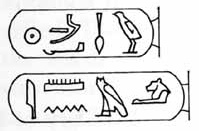
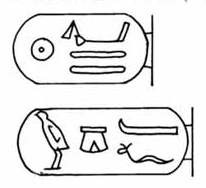
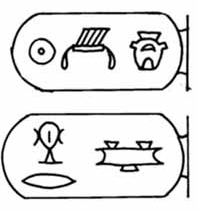
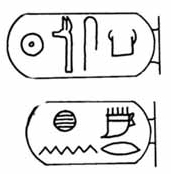
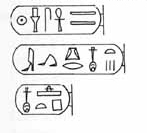
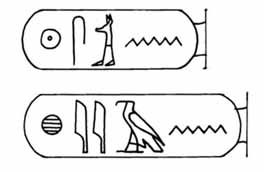
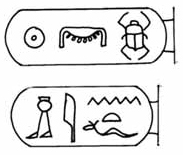
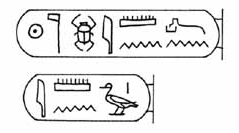
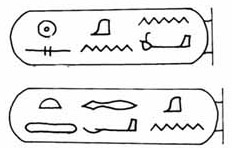
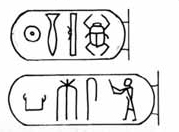
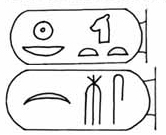
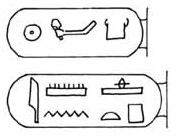
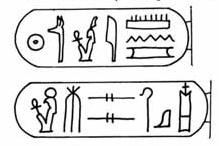
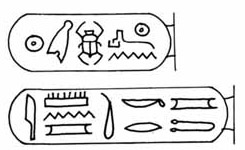
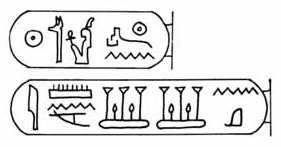
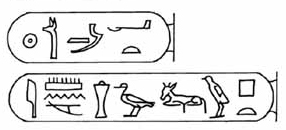
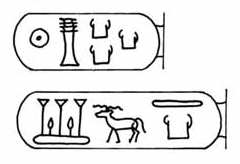
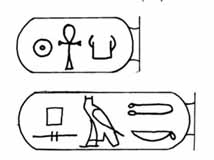
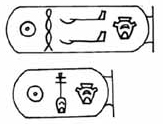
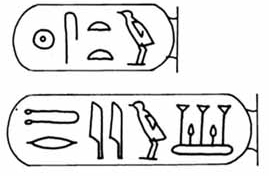
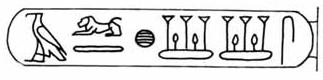
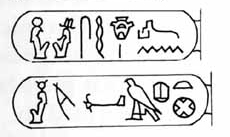
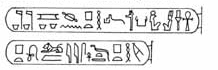
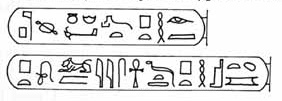
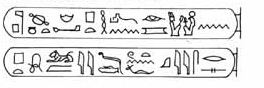
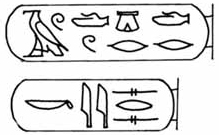
Royal Titulary
Each King created a name on his ascension to the throne and it was
also a 'mandate' for this style of leadership. The royal name was comprised of 5 separate elements (although earlier
kings used less) we modern writing often used the 'Nomen' or person name, which preceded his kingship. Many Egyptian
names were translated into Greek, for example Amenhotep (Egyptian) into Amenophis (Greek)
- older books tend to use the Greek names but this is now less common and a translation from the original hieroglyphs is
used.
The full titulary was only used in formal inscriptions; otherwise a king was usually identified by
his prenomen which was either written alone or accompanied by the nomen. The prenomen and nomen are usually left in their Egyptian forms (for example, 'Thutmose' rather than
translating it into 'Thoth-is-born'). The transliteration of the kings' names vary in modern books on Egyptology. Some
retain the Graecised form of a name, as it occurred in the historical account of Manetho (e.g., Amenophis, Sesostris,
Cheops), whereas others give a translation based on the Hieroglyphs (e.g., Amenhotep, Senusret, Khufu). Pronunciations
also vary, because of the absence of vowels in the hieroglyphic writings of the names and our limited knowledge of the
pronunciation of Ancient Egyptian.
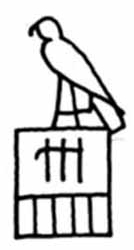
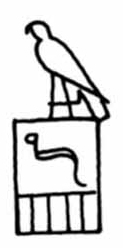
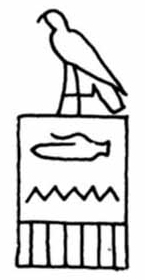
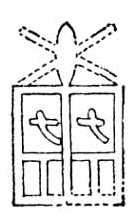
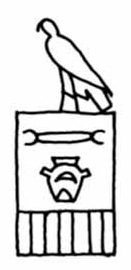
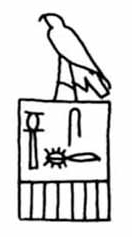
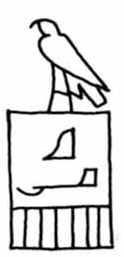
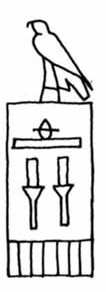
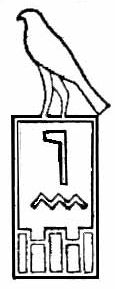
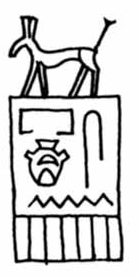
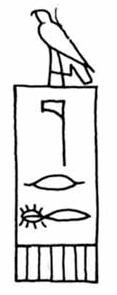
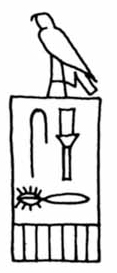
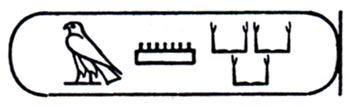
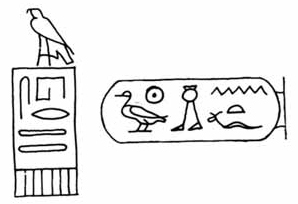
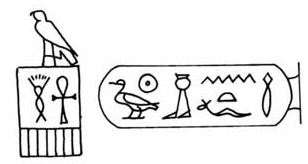
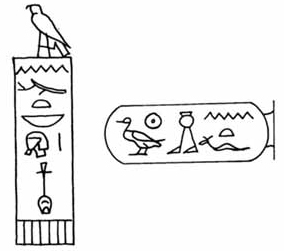
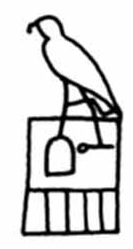
Horus name
- This name was often written within a rectangular frame, on top of which perched the falcon-god Horus,
which probably represented the king's palace. This name represented the king as the earthly incarnation of the ancient
falcon-god Horus, who became the first divine patron of royalty.
'Nebty' name - Nbty means the 'Two Ladies', and this name emphasises
the king's special relationship with the two great goddesses, Nekhbet, the vulture goddess of Upper Egypt, and Edjo, the
cobra goddess of Lower Egypt . They ruled supreme as the two ancient capitals of Hieraconpolis and Pe, before Egypt was
unified by King Menes in c.3100 BC. However, they continued to play an important role as royal protectress even after
unification - hence their inclusion in the royal titulary.
Golden Horus name - The meaning of this name is uncertain. It may signify the victory of Horus over his enemy Seth (in
the myth of Osiris), but it may represent the reconciled enemies, Horus and Seth, as lords of Egypt .
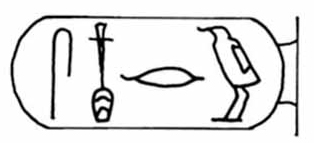
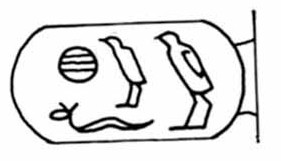
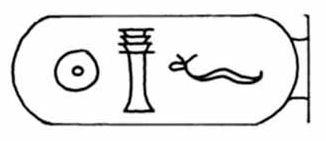
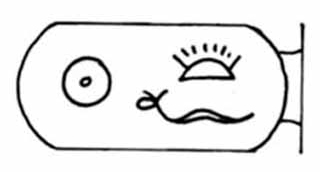
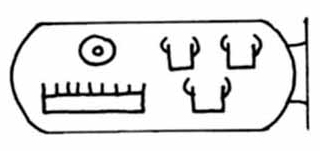
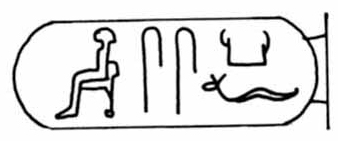
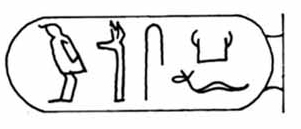
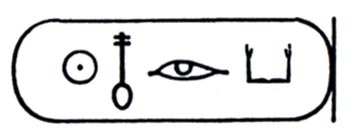
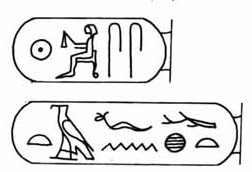
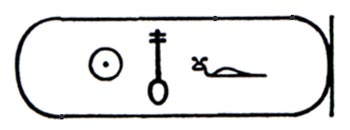
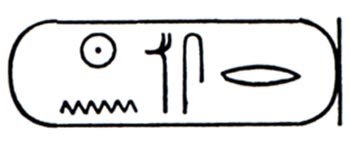
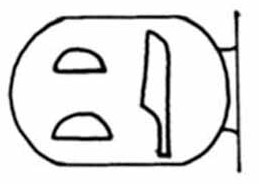
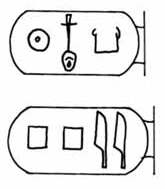
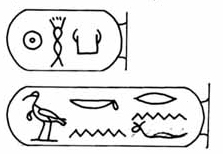
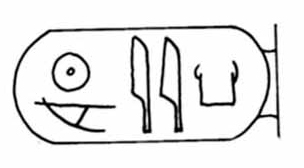
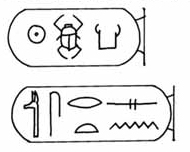
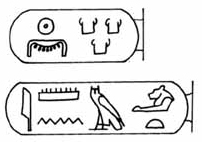
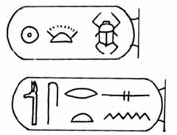
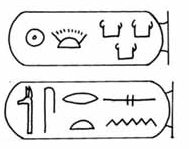
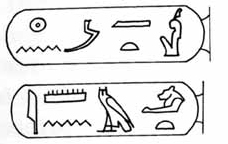
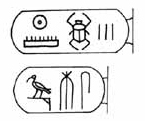
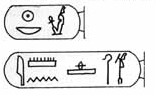
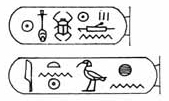
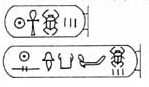
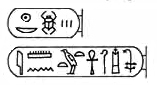
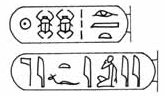
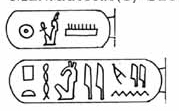
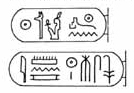
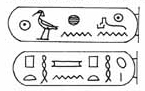
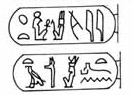
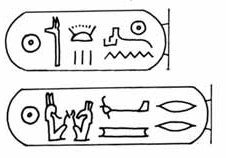
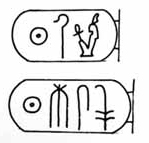
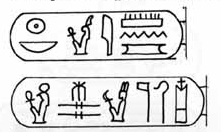
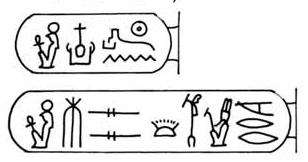
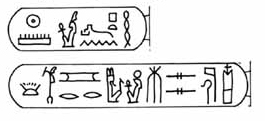
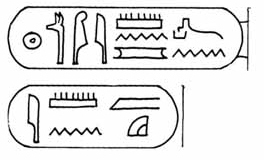
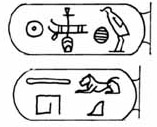
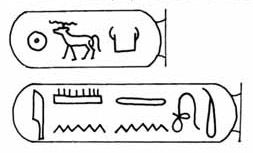
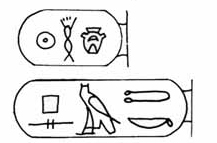
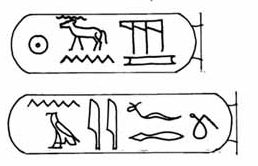
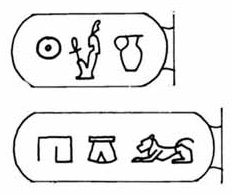
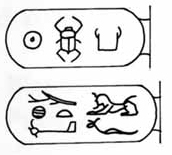
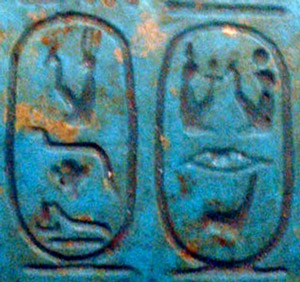
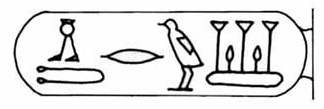
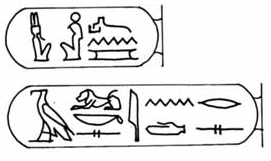
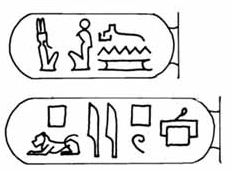
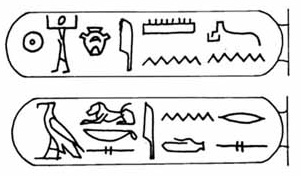
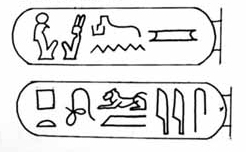
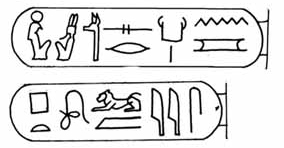
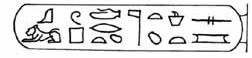
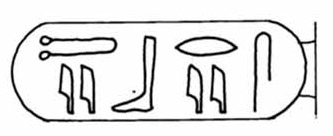
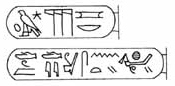
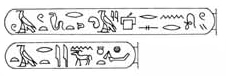
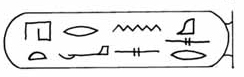
Prenomen - From the 5th Dynasty onwards (after King Sahure), the Prenomen and the Nomen were both written inside
cartouches. The prenomen was adopted as a religious name by each king when he ascended to the throne, and it was always
immediately preceded (outside the cartouche) by the title n-sw-bit 'he who belongs
to the sedge and the bee'. The sedge represented Upper Egypt, and the bee Lower Egypt, so the title meant 'King of Upper
and Lower Egypt '. The prenomen itself usually incorporates the name of the god Re (e.g.
nb-mAat-re, 'Re is Lord of Truth').
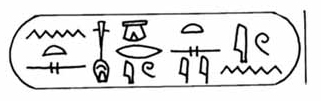
Nomen - The nomen, again enclosed within a cartouche, was usually the name of the king
before he succeeded to the throne (i.e. almost a family name) and therefore, it is not uncommon for several kings within
a family to have the same nomen (e.g. Thutmose, Amenhotep, Senusret). The nomen was immediately preceded (outside the
cartouche) by the title s3 ra ('son of Re').
There is a
Ancient Egyptian Dictionary
available for download (it is 2.9 Mbytes). Note - Don't forget that PDF files can be searched using Ctrl-F or
Shift-Ctrl-F (this is a good feature that lists all matches in a side window). This also works for Transliteration; e.g. to Find
(Ancient Egyptian inscription for 'Friendly') you can search for sbT Hr (case insensitive) using the
Manual de Codage system. The
same applies for the Gardiner (see full sign list),
which are separated by a dash.
Note - If you can't see an S with an upside down V above it inside the brackets (S)
then you need some additional fonts for your PC. Here is a link to the font file, which
can install or save (into your font directory, often c:\windows\Fonts\). You will need to re-load this page to see the
new fonts.
Ancient Egypt Web Site : Egyptology and Archaeology through Images : Last updated on
18-March-2012