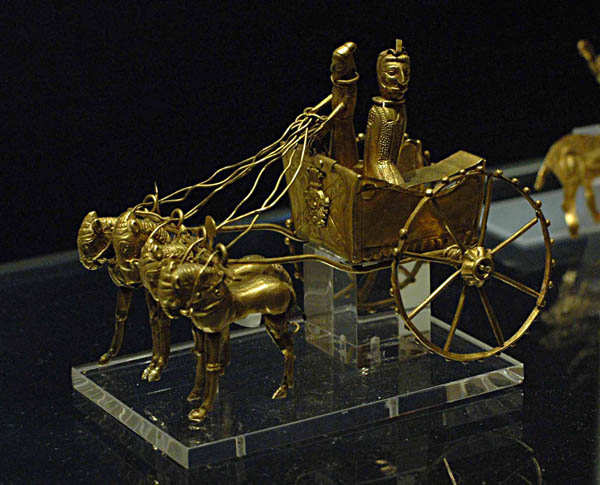
Acharmenid Persian model of a chariot being pulled by a four-house team and eight spoke wheels. c.500 - 400 BC (Oxus Treasure ME 123908) from the region of Takht-i Kuwad in Tajikistan. Bes is shown on the front of the chariot (protective god of the young) suggesting that the model was a child's toy.
The Oxus treasure is a collection of gold and silver from the Acharmenid period. Pieces from it are in the V&A Museum and the British Museum. It consists of 170 objects, including vessels, little models made of gold and electrum, a gold scabbard, model chariots and figures, armlets, seals, finger-rings, miscellaneous personal objects, dedicatory plaques and coins, all belonging to the richer members of society. It is thought it may have been a royal treasure looted from tombs and reburied and is dated to the fifth and fourth centuries BC.
In 1934 a group of merchants acquired the Treasure (the precise findspot is unknown, but thought to be on the River Oxus); however, on the road from Kabul to Peshawar they were captured by bandits, who dispersed the Treasure before they were rescued by Capt. F.C. Burton, British political officer in Afghanistan - he then helped them to recover the Treasure. These merchants then continued to Rawalpindi to sell the rest of the Treasure. Thus pieces of the Oxus Treasure were then bought from the bazaars of India, and finally ended up in the British Museum after this long journey.
Contact & Feedback : Egyptology and Archaeology through Images : Page last updated on 09-November-2025