Cistercian Abbey of Byland, Yorkshire
Byland was founded in 1134 by a colony of monks set out from the Savigniac abbey of Furness, in Cumbria, to found a daughter house at Calder. In 1138 Calder was destroyed by Scots raiders, then, in an effort to find a new site the monks crossed from Cumbria to North Yorkshire. Their first settlement was at Hood near Thirsk; in 1143 they moved to Old Byland; in 1147 to Stocking near Coxwold, and in 1177 they finally moved to the present site. The lay brothers had already occupied the site much earlier, since their range had been built by 1165. The Cistercians chose isolated places to build their monasteries in order to lead a life of manual work, prayer and meditation. Their monasteries consisted of choir monks who followed a strict timetable of prayer and worship, and lay brothers who spent most of their time doing manual work or farming the abbey’s increasing number of granges (estates). The Cistercians developed new farming methods and became skilled at rearing sheep on land considered useless for crops. In 1231 it was stipulated that the number of choir monks should not exceed eighty and no more lay brothers were to be recruited until the number had fallen below one hundred and sixty.
The abbey at Byland attracted the support of wealthy patrons who granted gifts of land, and, from the original small community of poor monks, it developed into a wealthy agricultural organisation, with estates as far away as Cumbria, stocked with thousands of sheep and cattle. By the end of the twelfth century there were about 80 choir monks and over 160 lay brothers living at Byland. This economic success, eventually compromised the earlier ideals of the Cistercian order, and, by the fifteenth century, a more comfortable lifestyle had been adopted. This, in turn, deflected patronage to other monastic orders.
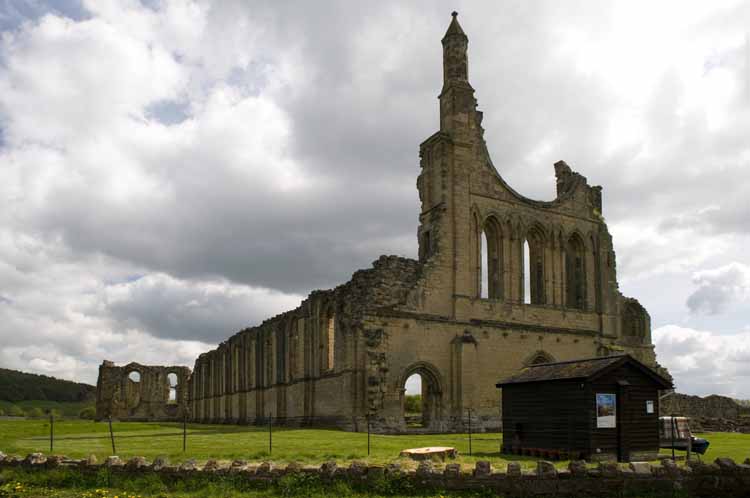
In the fourteenth century two events were to have an impact on Byland. In 1322, at nearby Shaws Moor, Edward II was defeated by invading Scots who subsequently devastated the abbey lands. Then, an outbreak of the Black Death in 1348 resulted in a sharp decline in the number of recruits to the abbey. Lay brothers were now difficult to recruit, and the abbey moved from direct farming to obtaining its income from rents and leases. By 1381 there were only eleven monks and three lay brothers. In 1538 the last Abbot of Byland, John Ledes, in charge of only 25 choir monks, surrendered the abbey to the King’s Commissioners. Stripped of any valuable items and materials, then plundered for stone, the abbey buildings soon became ruined.
The abbey's architectural details influenced the later building of Dundrennan Abbey, Dumfries and Galloway.
Sources:
University of Sheffield - The Cistercians in Yorkshire Project
Byland Abbey; Guide Book, 2009, London: English Heritage
Byland Abbey;
Information for Teachers, 1999, English Heritage
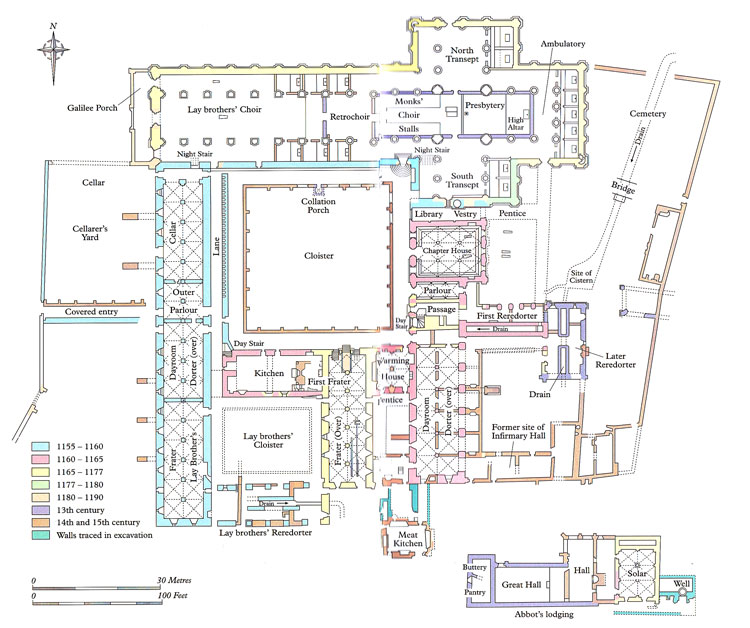
Plan of the Abbey (Byland Guide Book):