Cistercian Abbey of Buildwas, Shropshire.
The abbey of Our Lady and St. Chad at Buildwas was founded in 1135 by Roger de Clinton, bishop of Coventry (1129-48). It was originally a Savigniac community colonised by monks from Furness, and when it became Cistercian, along with all the other Savigniac houses in 1147, new buildings were erected. Situated on the bank of the Severn it was close enough to the Welsh border to suffer from what was called the ‘levity of the Welsh’. This meant that the abbey suffered occasionally from raids carried out by the Welsh princes and their followers. In 1350 the abbot was kidnapped and imprisoned by raiders from Powys, and in 1406 its estates were laid waste by the followers of Owain Glyndwr. The Welsh were not the only problem: in 1342 the abbot was murdered by one of his own brethren, Thomas Tong. Tong managed to evade arrest and later had the audacity to petition for reinstatement to the Cistercian Order. Unlike the majority of Cistercian houses Buildwas did not expand to any great extent, and did not establish any daughter houses or granges. However, it was given responsibility for the Cistercian houses of Basingwerk in 1157 and St. Mary’s Abbey, Dublin, in 1166.
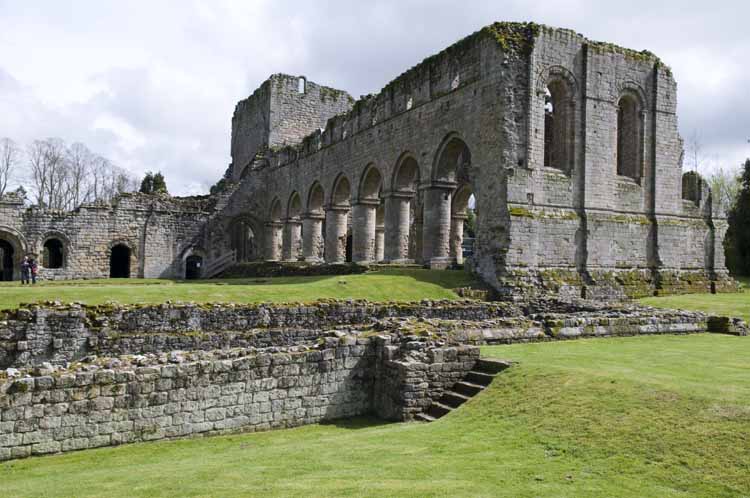
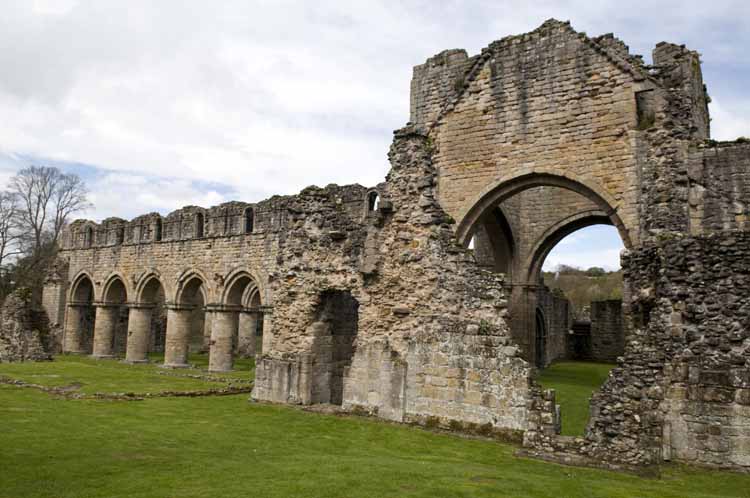
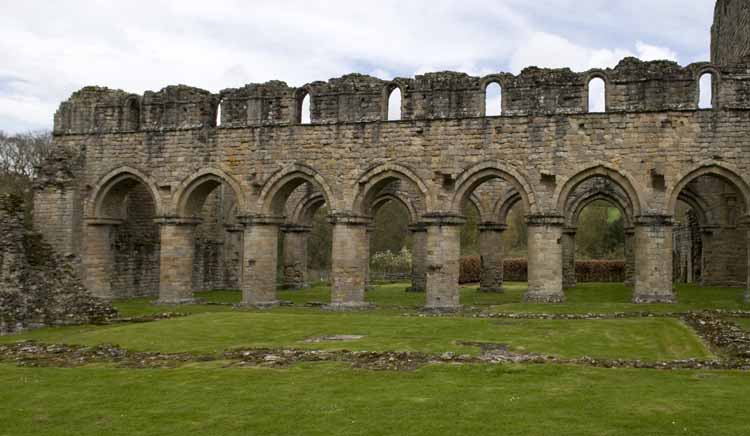
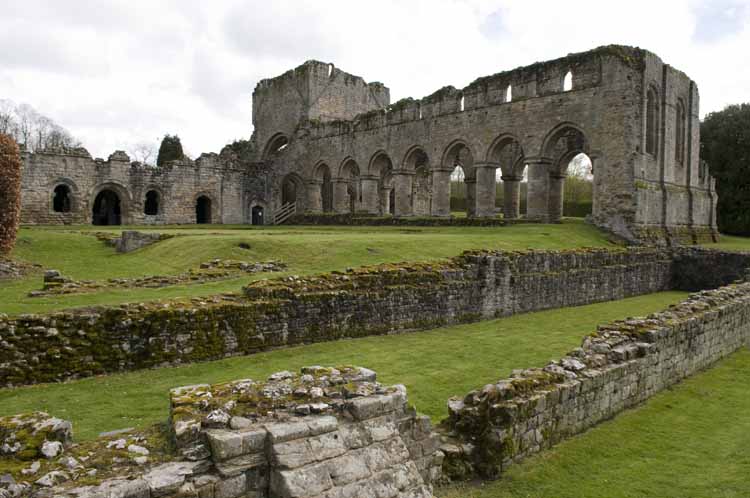
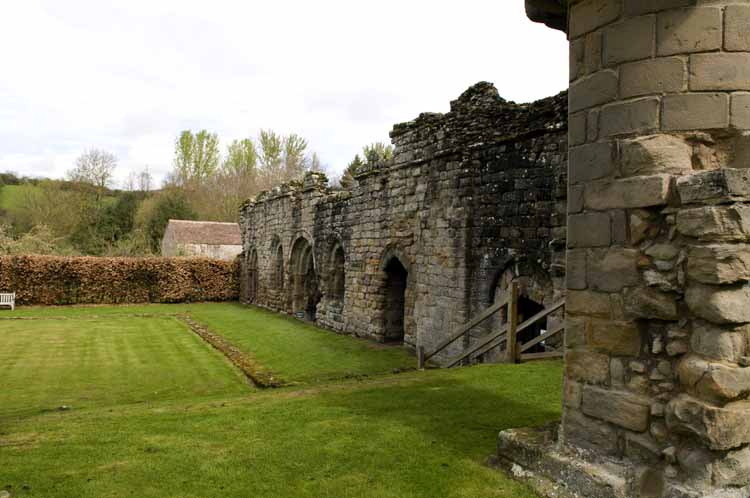
Buildwas Abbey remained a small and relatively unimportant community which derived its income from collecting the tolls on the bridge on the River Severn. By the late fourteenth century the total number of monks had fallen to four. The numbers had risen again to twelve by the early sixteenth century but, when Buildwas was dissolved in 1536, only seven monks remained in the house. The church stands almost complete, apart from the roof, and remains virtually unaltered since its original construction. The remains of the church are among the best preserved 12th century examples of a Cistercian church in Britain. 'A row of sturdy Norman nave columns emphasise the power and dignity of the relatively small Cistercian church, and appear as stark and imposing as they would have done in the Middle Ages.' There are also substantial remains of the central buildings and the greater part of the precinct can be traced as earthworks. The infirmary was converted into a dwelling house after the Dissolution and is now used as a club house for the employees of the large power station nearby.
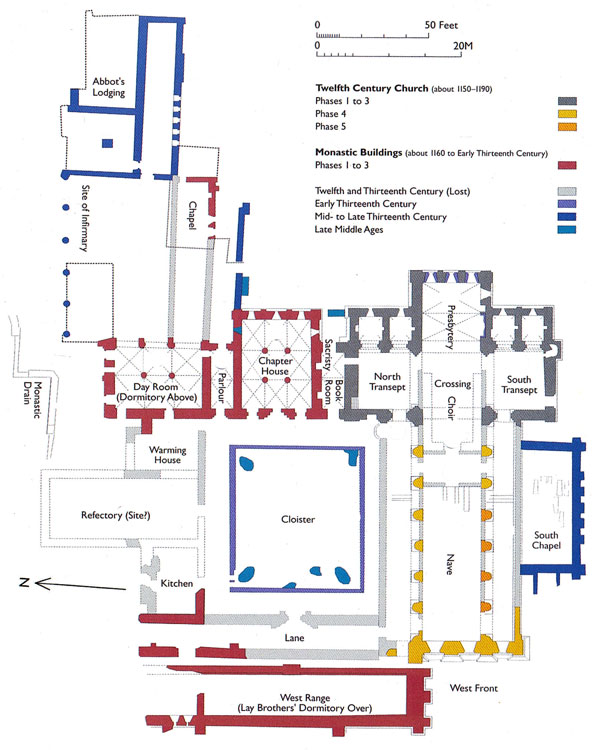
In common with other Cistercian abbey's Buildwas is oriented with the presbytery facing east but its cloister, unlike most other abbeys, is to the north of the site; this is found at locations where the topography necessitated this layout.
Sources: University of Sheffield - The Cistercians in Yorkshire Project Buildwas Abbey, 2009, London: English Heritage
Plan of the Abbey (English Heritage Guide Book):